Solar Power Fuels a Thriving Mushroom Business in Kenya
Tujay Mushrooms is proving how solar-powered technology can help young people build skills, create jobs, and grow a thriving business in coastal Kenya.
For George Tunje, the long stretch of sun-lit sandy beaches in Kilifi has a calming and larger-than-life effect on him. It is what attracts millions of tourists from all over the world and keeps them coming back every year.
However, as you move inland, away from the calm, cool environment of the beach, a different reality slowly begins to emerge.
Where challenge meets opportunity
The coastal heat and inadequate access to consistent, reliable power have made it difficult and costly for people to engage in meaningful economic activities. Among the economic activities hardest hit by this is agriculture.
Unreliable rainfall and prolonged droughts have led to massive crop failures year after year, and to food insecurity in the area. This costs locals more than just their livelihoods.
So Tunje and his peers came together to form a business that would solve this problem.
Turning to mushrooms and the Sun
After careful research and assessment, they settled on mushroom farming. By combining solar technology with modern appliances, Tunje and his peers now sustain a thriving agribusiness venture and create employment for young people in Kilifi — something that once seemed impossible.
Today, the group is known as Tujay Mushrooms.
Tujay Mushrooms was founded in 2019 with a vision to create sustainable opportunities for young people while promoting climate-smart agriculture. What started as a simple mud-walled structure has now grown into a modern, climate-smart mushroom farm in Kilifi, with an impact that reaches far beyond Kenya.
Tunje says the desire to demonstrate to young people that agriculture can be modernized and profitable is what drove them to keep going despite initial challenges with frequent power interruptions and high temperatures.
“As young graduates, we saw many talented and hardworking youth struggling with unemployment and limited access to practical business opportunities. We wanted to demonstrate that agriculture could be modern, profitable, and attractive to this generation,” says Tunje.
He added that the business relied on continuous learning, experimentation, and support from partners to improve its production.
Powering growth with the sun
Despite more than 80% of the Kenyan population having access to electricity, businesses like Tujay Mushrooms still struggle to cope with frequent outages that lead to appliance damage, slowed progress, and damage to perishable goods.
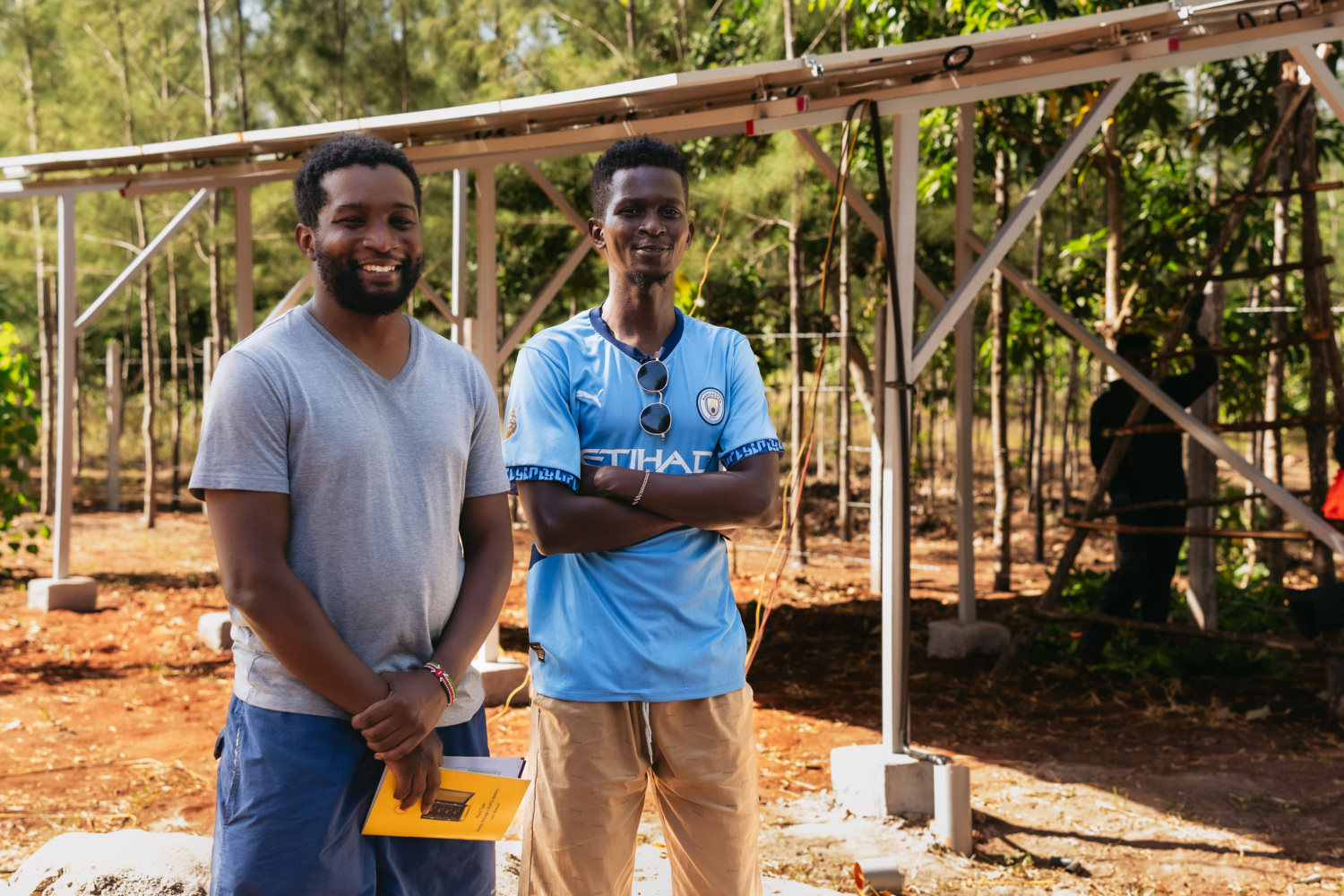
Tunje says he remained determined to face the challenges and use them as opportunities to innovate by improving infrastructure and exploring renewable energy solutions. Kilifi’s hot climate and frequent power outages make it hard to maintain the temperature and cool airflow required for mushroom farming. The group decided to harness solar energy to keep the venture productive and profitable.
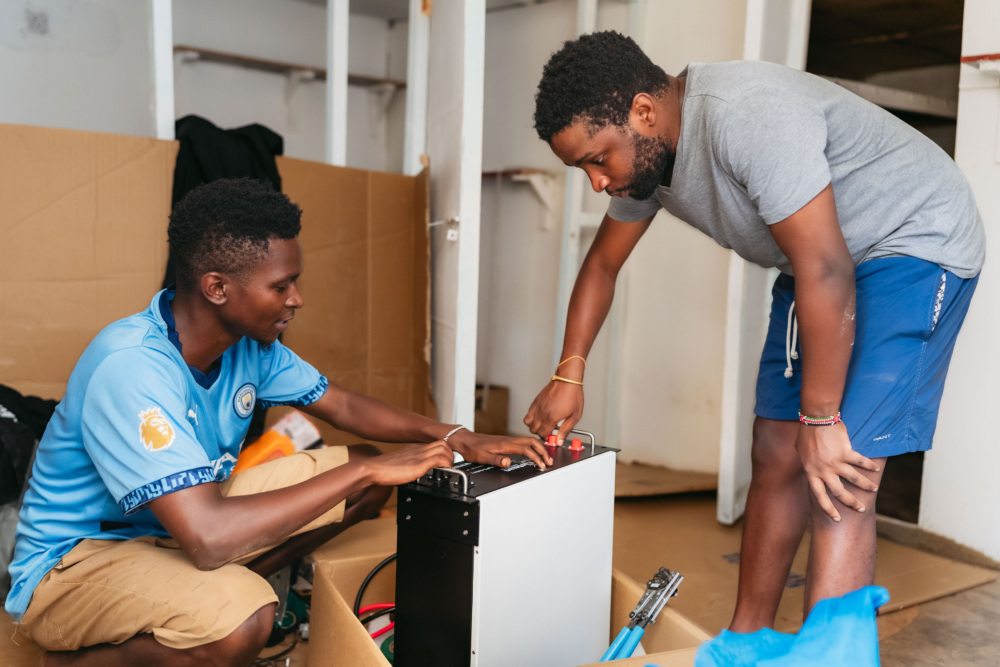
Through the PURE Demonstrator Project, implemented by CLASP through the Efficiency for Access coalition in partnership with Raynow Energy, Tujay integrated solar-powered productive use technologies across its mushroom production system. This enabled them to use clean and renewable energy in value chain management — from ventilation during the growing stage to processing after harvest.
“Solar energy now powers critical climate-control equipment such as humidification systems, cooling units, ventilation, and environmental monitoring devices that maintain the ideal conditions required for healthy mushroom growth. Beyond cultivation, the solar system also powers equipment used for mushroom spawn production, processing, and value addition, enabling us to operate more efficiently throughout the entire value chain,” says Tunje.
The transition to clean energy ensured access to clean, reliable power that cut operating costs and ensured that Tujay consistently produces quality mushrooms.
Building skills for a shared future
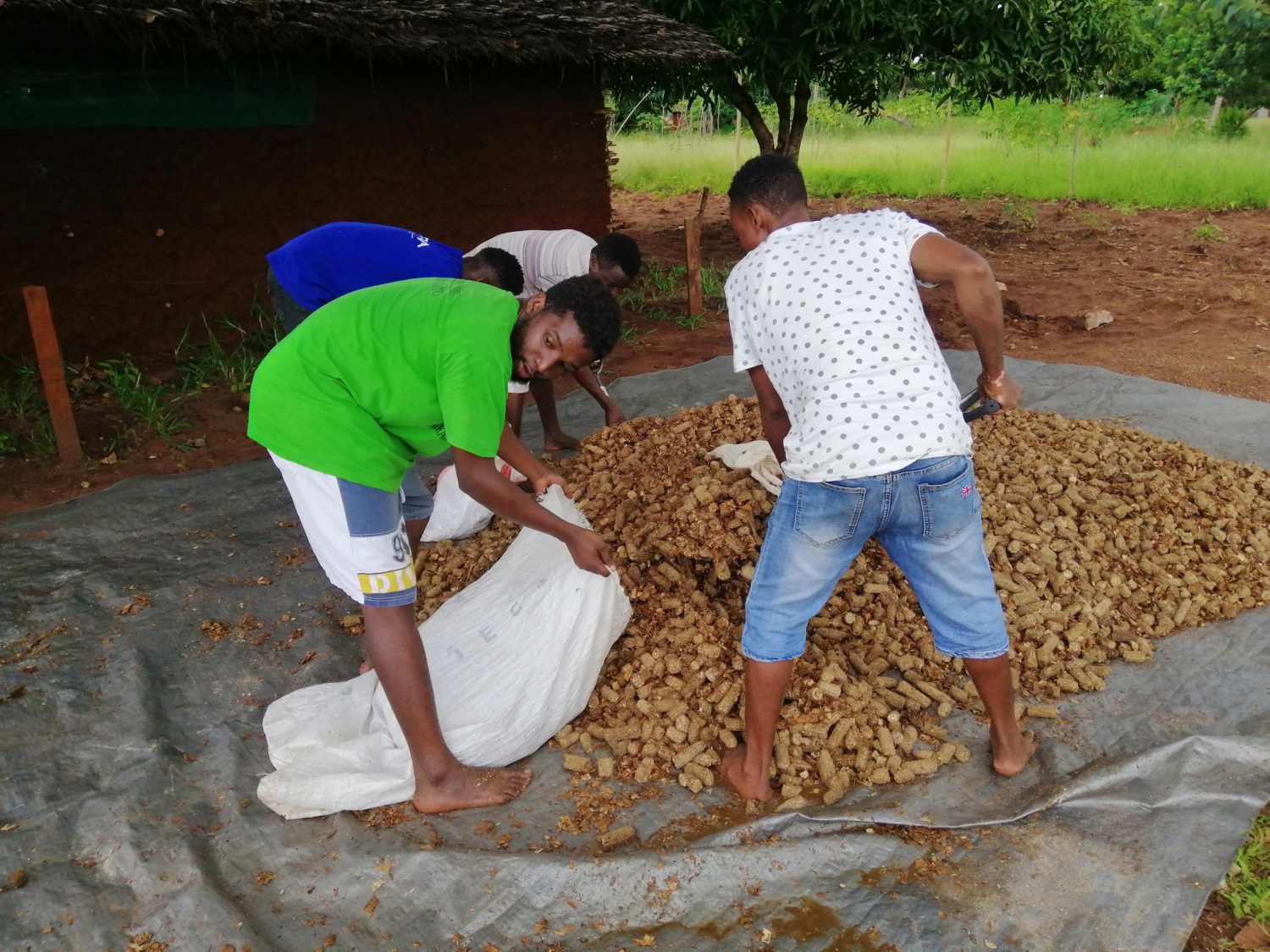
A key aspect of their operations has been the integration of young people into the business. The farm is now focusing on equipping young people with skills in large-scale mushroom farming.
In line with this year’s World Youth Skills Day theme, “skills for a shared future,” Tunje says the focus is no longer about traditional farming methods, but about innovation, technology, entrepreneurship, and solving real-world challenges for a better future. He says mushroom farming demonstrates how young people can transform agricultural waste into nutritious food, create businesses, protect the environment, improve livelihoods, and lead the transition toward a more sustainable and resilient agricultural future.
Since its inception, Tujay has trained more than 25 young people in mushroom cultivation. The trained youth have gained skills in mushroom farming as a source of household nutrition and as an income-generating enterprise.
Jobs, income, and benefits that reach beyond the farm
The growth of Tujay Mushrooms as a successful business venture in Kilifi has brought with it multiple opportunities for young people and Kilifi locals. Tujay currently employs four people, including a female Farm Manager, a Communications Officer, a Security Officer, and a Caretaker who helps maintain the farm. These employment opportunities have provided a stable income for young men and women in Kilifi.
Moreover, the farm’s caretaker, affectionately known as “Babu,” lives with his family on the farm. Through Tujay’s solar installation, Babu’s household also gets a clean, stable off-grid power supply. This has made it possible for his children to study and complete their homework, as well as meeting lighting and other domestic power needs within the household.
The productive use of clean energy has extended the benefits well beyond the farm itself.
From farm to market
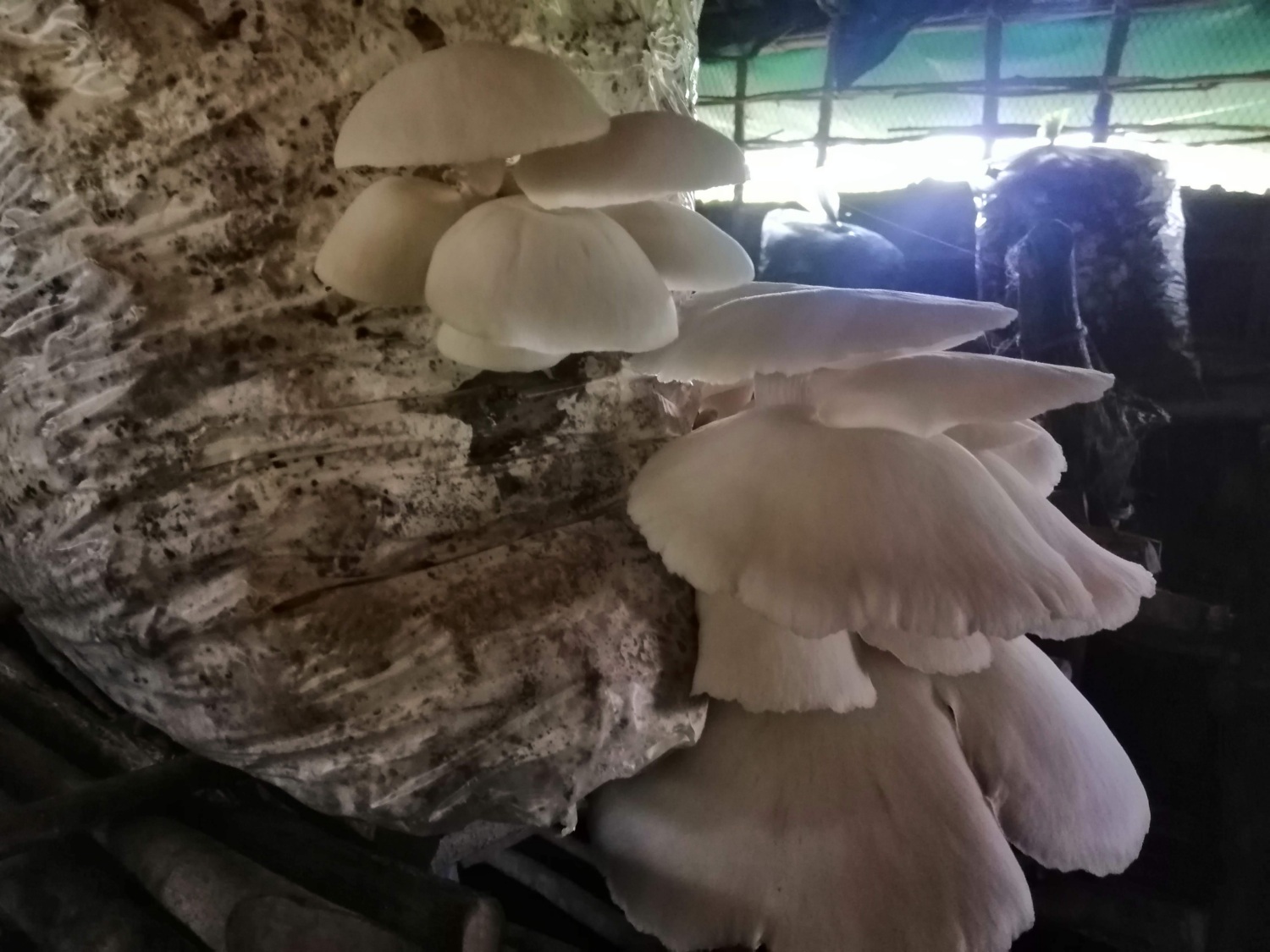
The farm generates income through the production and sale of edible and medicinal mushrooms, serving hotels, restaurants, and individual consumers across Kilifi. As of July 2026, Tujay has produced and sold more than 300 kilograms of fresh oyster mushrooms while continuing to expand its production capacity and diversify into value-added mushroom products.
The farm also has an active partnership with Pwani University, where it creates opportunities for research, innovation, and youth engagement in climate-smart agriculture. The farm is now aiming to provide mushroom seedlings, practical training, and market opportunities to aspiring growers in an effort to build a more resilient and inclusive mushroom value chain across coastal Kenya.
Investing in the next generation of farmers
One of Tujay’s biggest challenges at inception was accessing the capital needed to establish a modern mushroom production facility. Mushroom farming requires specialized infrastructure, environmental control systems, and quality production equipment, which can be costly for a young startup.
The capital access and financing gap is not unique to Tujay. According to the World Bank, inadequate access to finance remains among the key constraints preventing businesses from expanding and innovating. About half of all small businesses in Sub-Saharan Africa lack access to formal credit. Most try to bridge the capital gap by relying on internal funds or cash from friends and family to launch and run their business. In the region, about 41 percent of small and medium enterprises (SMEs) have unmet financing needs.
CLASP’s Senior Director Emmanuel Aziebor says that while access to capital remains a challenge for small businesses and the youth, CLASP is working closely with partners to roll out financing mechanisms on a large scale and cushion businesses against existing and emerging challenges.
“In Africa, a lot of the agriculture is done by smallholder farmers and marginalized communities. We are therefore focusing our efforts on creating a good environment for young people and women to get more involved in productive agriculture. This will make it possible to be self-sufficient in food production and cut down on import costs,” says Aziebor.
Building trust, one mushroom at a time
Before venturing into commercial production, Tujay conducted market research across the Coastal region to better understand consumer demand and identify potential customers. They found a growing market for fresh mushrooms, particularly among hotels, restaurants, and health-conscious consumers.
Despite mushrooms being an unfamiliar dish in coastal Kenya, Tujay invested heavily in awareness creation through social media, educational content, farm visits, and community engagement. By sharing their journey and educating the public about the health benefits of edible and medicinal mushrooms, customer confidence grew gradually, and demand kept rising.
A Blueprint for the future
Specialized agriculture, like mushroom farming, holds a lot of opportunity for many people in Sub-Saharan Africa. When combined with solar energy use, mushroom farming can move beyond subsistence for farmers to impactful economic support through employment and foreign exchange earnings from exports. Tujay embodies this promise.
The success of Tujay Mushrooms shows how profitable farming can become when young people are equipped with the right skills, supported by clean energy, and empowered to transform challenges into opportunities.
In Tujay’s solar-powered farm, mushrooms are not the only things sprouting; skills are sprouting too, along with businesses, ideas, and hope for a prosperous tomorrow.