Efficiency for Access Design Challenge Accelerator Programme

The Efficiency for Access Design Challenge Accelerator Programme is an exciting opportunity for Challenge alumni to take their innovative ideas to the next level. Delivered in partnership with Energy Catalyst and supported by Intellecap and Eigen Ventures, the programme provides tailored support, mentoring, and funding to help participants transform projects into early-stage businesses.
Programme Overview
The Accelerator Programme is structured to support participants in developing their market strategies, business models, and product innovations. With the expertise of Intellecap and Eigen Ventures, both leaders in business advisory and clean-tech innovation, participants gain valuable insights and tools to progress their ventures. Core activities include workshops, mentoring sessions, and tailored needs assessments, culminating in a final pitch and eligibility for grant funding.

Key Components of the Programme
Participants engage in six thematic areas of market analysis and understanding, strategy and business planning, supply chain and operations, financial strategy and capital raising, technology and product IP, and team development. These two-hour sessions are followed by practical exercises, allowing participants to apply insights and skills to their specific projects.
Each team completes a needs assessment to identify their strengths, challenges, and development priorities. This helps the programme adapt workshops and mentoring sessions to their specific requirements, ensuring a personalised approach to success.
Participants receive tailored assistance in one-to-one mentoring sessions with an industry expert which are designed to help students integrate workshop learnings into real-world applications. Mentoring also provides teams with the resource to discuss their projects, and apply their learnings throughout its developmental stages.
Final Assessment and Grant Funding
The programme concludes with a final pitch, where teams present their projects to a panel of judges. Pitches cover key themes, including strategy, supply chain, and capital raising. Teams are eligible for pre-seed grant funding to further their ventures.
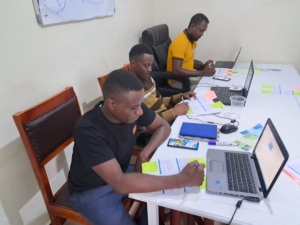
Awardees: First Cohort
The first round of awardees from the first year of the Efficiency for Access Design Challenge Accelerator Programme have been announced:
- M&S: Joy Muntet & Vallary Shinaywa – Affordable smart solar irrigation system with soil moisture sensors to optimise water usage for small-scale farmers.
- ASEI: Moses Alicwamu – Solar powered UV-C LED systems for sterilising drinking water, targeting schools and healthcare facilities.
- Solar Sip Africa: William Steve Mwai – Solar-powered kiosks generating clean drinking water from atmospheric moisture for areas with limited water access.
- PikaNaSolar: Angela Achola, Angeline Njuguna & Collins Mugwanga – Solar-powered pressure cooker with inbuilt battery for 24/7 clean cooking access in off-grid areas.
- Solar Water Filter Fountain: Mika Sall, Amadou Ndiaye & Mamadou Faye – Autonomous solar water filtration fountains providing clean drinking water in rural African areas.

Second Cohort
- SOLGENH2: Trevor Atela and Andy Onyango – A solar-powered hydrogen energy system designed to provide consistent off-grid electricity for rural hospitals.
- ITEDA SOLUTIONS: Job Ian Onyango, Isaiah Ochieng, Ruman Hassan, Ronit Mepani, and Emmanuel Sintila Lekatoo – a modular solar dryer aimed at reducing maize drying time and post-harvest losses for smallholder farmers.
- Jua Coolight: Noah Midikira, Anthony Mwangi, and Stefan Mari – a solar-powered hub that combines cold storage with lantern charging capabilities.
- Aeroclock Technicals Pvt Ltd: Morelife Zibaiwa, Precious Chiwera, Tatenda Mugwazi, Oslie Munyangamire, and Talent Chigwagwa — The SunBlade Trimmer – an innovative solar-powered lawn mower.
- Automated Solar Powered Fresh Produce Cooling Appliance: Patrick Ndayisaba, Dushime Diedonne, Pamella Uwicyeza, Dushime Dieudonne, and Divine Ishimwe Hatangimbabazi – A cooling appliance for the storage of fresh produce designed to reduce post-harvest losses.
- IlluMedica: Tafadzwa Chipuriro, Glynnly Masanga, Tukudzwa Munorweyi, and Calvin Kuhuni – a solar-powered system that combines lighting with a smart pill dispenser.
- Murindi Agritech Solutions: Simon A Musikavanhu, Leroy L Taderera, and Terrance S Kanhanga – a solar-powered bird deterrent system that uses sensors and drones to protect crops.
- AGRILYTHOS: Augustin Nkundimana, Innocent Nsengimana, Rachel Uwagiriwubuntu, and Jean Bonhuer Tuyubahe – a smart, solar-powered automated sprayer designed for applying liquid fertilisers and pesticides.
- INESAM: Samuel Turahimana, Victorien Ukurikiyimfura, Dative Tushabomwe, Aline Gihozo, and Francois Bizimana – a solar-powered cold room solution, integrated with a mobile delivery service.
About the Efficiency for Access Design Challenge
The Efficiency for Access Design Challenge is a global, multi-disciplinary competition that empowered teams of university students to help accelerate clean energy access. The Challenge was delivered by research and development innovators, Efficiency for Access, in collaboration with Engineers Without Borders UK and funded by the UK government via the Transforming Energy Access platform and the IKEA Foundation.
To provide sustainable energy for all, we urgently need to enhance the efficiency and affordability of high performing appliances. The Challenge invited teams of university students to create affordable and high-performing off-grid appliances and enabling technologies.