Making the Switch: The Deployment Handbook for Institutional E-Cookers
This report aims to inform practitioners seeking advice on the design, deployment, and operation of commercially available institutional e-cooking technologies and provide actionable recommendations for scaling e-cooking in institutions in Kenya.
Download Resources
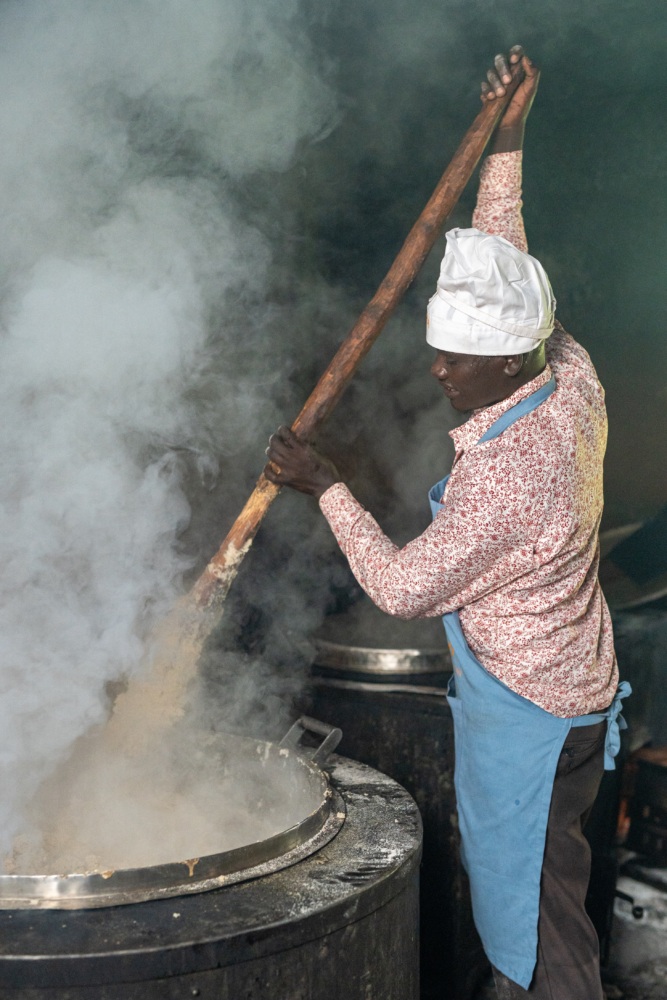
Social institutions, such as schools, health facilities, and correctional facilities, in sub-Saharan Africa are the second-largest biomass energy consumers, trailing only households. In Kenya, about 90% of institutions rely on wood biomass for cooking. Reliance on these traditional biomass fuels has many consequences for the environment, the economy, and human health.
Electric cookers offer a viable alternative to biomass fuels, and many institutions are well-primed to make the switch, as most already have access to electricity. In Kenya alone, a transition to e-cooking is estimated to create over 400,000 green jobs in institutions, reduce greenhouse gas emissions by 5.1 Mt CO2 annually, and save 5.7 million trees each year, all while providing nutritious meals to over 10 million schoolchildren across the country.
This report, in partnership with the Modern Energy Cooking Services (MECS) programme, “Making the Switch: The Deployment Handbook for Institutional E-Cookers,” aims to inform practitioners seeking advice on the design, deployment, and operation of commercially available institutional e-cooking technologies and provide actionable recommendations for scaling e-cooking in institutions in Kenya. This guide covers commercially available institutional e-cooking technologies designed for both on- and off-grid applications. It provides:
- An overview of the current state of e-cooking in institutions in Kenya
- Step-by-step advice for the pre-assessment, planning, installation, and commissioning of e-cooking solutions
- Opportunities to scale the adoption of institutional e-cooking
Download “Making the Switch: The Deployment Handbook for Institutional E-Cookers” to read our key findings, recommendations, and guidance on electric cookers in institutional settings.
About the MECS programme
Modern Energy Cooking Services (MECS) is an eleven-year research programme funded by UK Aid (FCDO). MECS is a geographically diverse, multicultural and transdisciplinary team working in close partnership with NGOs, governments, private sector, academia and research institutes, policy representatives and communities in 16 countries of interest to accelerate a transition from biomass to genuinely ‘clean’ cooking.
In seeking to spark a new approach to clean cooking, the MECS programme researches the socio-economic realities of a transition from polluting fuels to a range of modern fuels. Whilst the research covers several clean fuels, the evidence is pointing to the viability, cost effectiveness, and user satisfaction that energy efficient electric cooking devices provide. Significant progress has been made in access to electricity in the last decade, but these gains are sometimes disconnected from the enduring problem of clean cooking. By integrating modern energy cooking services into the planning for electricity access, quality, reliability and sustainability, MECS hopes to leverage investment in renewable energies (both grid and off-grid) to address the clean cooking challenge.