The School Kitchen Helping Shape Kenya’s Clean Cooking Future
A 45% drop in fuel costs at a school in Siaya is helping Kenyan lawmakers make the case for bringing clean cooking to schools across the country.
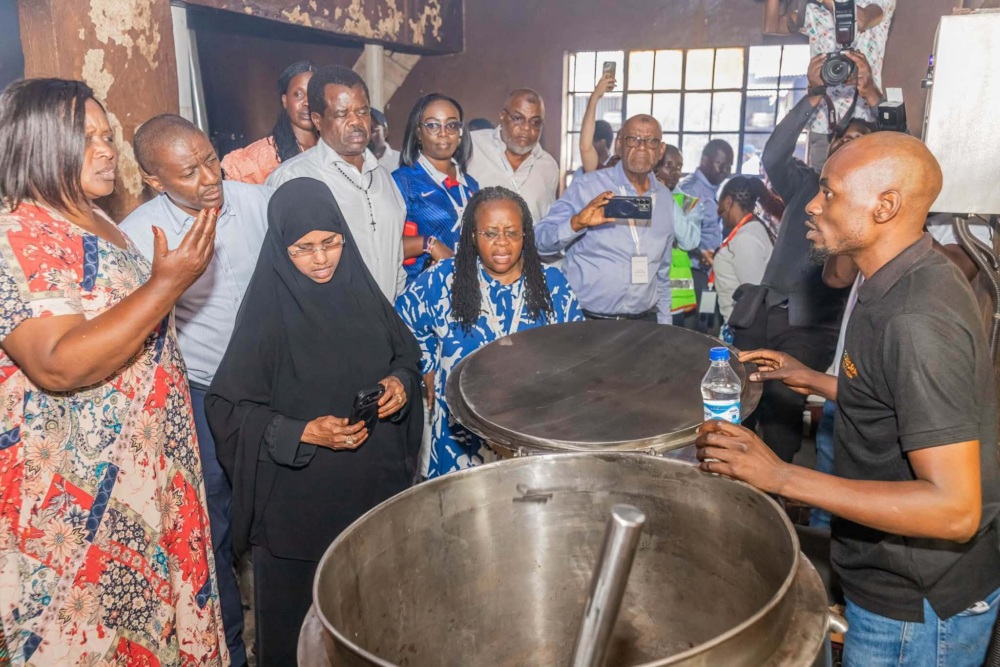
On 9 July 2026, Hon. Elisha Odhiambo, Chair of the National Assembly’s Departmental Committee on Energy and MP for Gem, led fellow legislators into the kitchen at Nyawara Girls’ Senior School in Siaya County. What they found: an Ecobora electric cookstove running alongside firewood, and a termly fuel bill that had dropped by roughly 45%, from KSh 200,000 to KSh 110,000.
The visit was part of the 2nd Kenya Parliamentary Green Investment Dialogue, held in Kisumu on 9–10 July, convened by the Parliamentary Climate Caucus, chaired by Sen. Moses Kajwang’ and Hon. Charity Kathambi Chepkwony, together with UNIDO and Climate Parliament under the Green Climate Fund-supported Parliamentarians for Climate Finance programme. The two-day dialogue brought together more than 20 MPs and Senators, alongside senior government officials and private-sector innovators working on clean energy in Kenya.
Efficiency for Access and Modern Energy Cooking Services (MECS) were represented at the dialogue by CLASP’s Martha Wakoli and Towett Ngetich. Also present were the State Secretary for the Ministry of Investments, Trade and Industry; officials from the Ministry of Energy, KETRACO, and the Office of the Special Envoy for Climate Change; KEREA, AGNES, WRI, and Strathmore Energy Research Centre; and private-sector innovators EMAK, AMDA, Burn Manufacturing, BasiGo, and Ampersand.


A proof point, two years in the making
Nyawara Girls’ School is one of nine schools that piloted an Ecobora electric cooker in 2024, through an Efficiency for Access project with Kenyan innovator Ecobora. The project field-tested whether electric cooking could replace biomass fuel in institutional kitchens, installing electric cooking boilers in nine schools across seven counties and helping feed more than 12,000 students. Two years on, the cookers are still in daily use, proof that electric cooking works at scale: reliable, affordable, and fully capable of producing traditional Kenyan dishes for large numbers of students.
That track record is what made Nyawara Girls the reference site for the entire second day of the dialogue. The school’s approach, running an electric cookstove alongside firewood, rather than switching over all at once, also made a persuasive case to legislators: a gradual transition can deliver real savings without requiring schools to convert everything overnight.


From One School to a National Plan
Building on this evidence, the Climate Caucus is now working with UNIDO to design the Programme for Accelerating Clean Cooking Transition in Kenya (PACCT), a proposal for Green Climate Fund consideration. The programme targets solar power and clean cooking for 3,000 unelectrified public schools, selected from roughly 97,000 candidate institutions and prioritising schools with no grid connection. At an estimated USD 45,000 per school, it’s projected to avoid approximately 3 million tonnes of CO2-equivalent emissions and reach 1.5 million students and staff.
The plan builds on other work already underway in Kenya: a monitoring and evaluation tool is being piloted in Makueni County, where CLASP holds a partnership agreement with the county government, offering a ready-made model for tracking results as PACCT moves forward.
The visit to the school demonstrated to lawmakers how a hybrid institutional kitchen functions. An Ecobora electric cookstove running alongside firewood has cut the school’s fuel spend by about 45%, from KSh 200,000 to KSh 110,000. The school’s clean cooking installation became the reference point for clean cooking discussions on day two, highlighting how institutions can seamlessly transition to clean cooking.

A model of local leadership
This story is really about how early technical support can help local partners design and lead their own solutions. What began as a research project in 2024, simply testing whether electric cooking worked in a Kenyan school kitchen, has, two years later, become the evidence base for a Kenyan-led investment case now seeking Green Climate Fund backing.
The result is a Kenyan-owned solution that advances climate action and economic development together, while improving health and environmental outcomes for schools and communities across the country.
Efficiency for Access remains committed to supporting this transition, backing the technical expertise and evidence that let Kenyan institutions, communities, and legislators design and lead the next stage themselves.

Attendees for the Climate Caucus included Nominated Senator Catherine Mumma, Nominated MP Irene Mayaka, Kisii Women MP Representative Doris Abure, Nyaribari Masaba MP Dr. Daniel Manduku, Gem MP Elisha Odhiambo, Changamwe MP Omar Mwinyi, Mandera Nominated MP Mariam Omar, Tom Odede, Senator Beatrice Ogolla, Hassan Mwinyi Haji, Kachelibah MP Titus Lotte, Njoro MP Charity Kathambi, Senator Beth Syengo, Busia Senator Okiya Omtatah, Nyamira Women Representative Jerusha Momanyi, Marakwet West MP Timothy Kipchumba Toroitich, Consolata Okwogibi, Kabondo Kasipul MP Dr. Evelyn Obara, Senator Moses Kajwang’, Sirisia MP John Waluke, Makueni Senator Dan Maanzo.